
Eliminate exposed inbound access for remote systems
Download the NoPorts architecture brief to learn how identity-first connectivity helps secure remote access without open inbound ports, static IPs, VPN complexity, or major network re-architecture.
// Why this matters
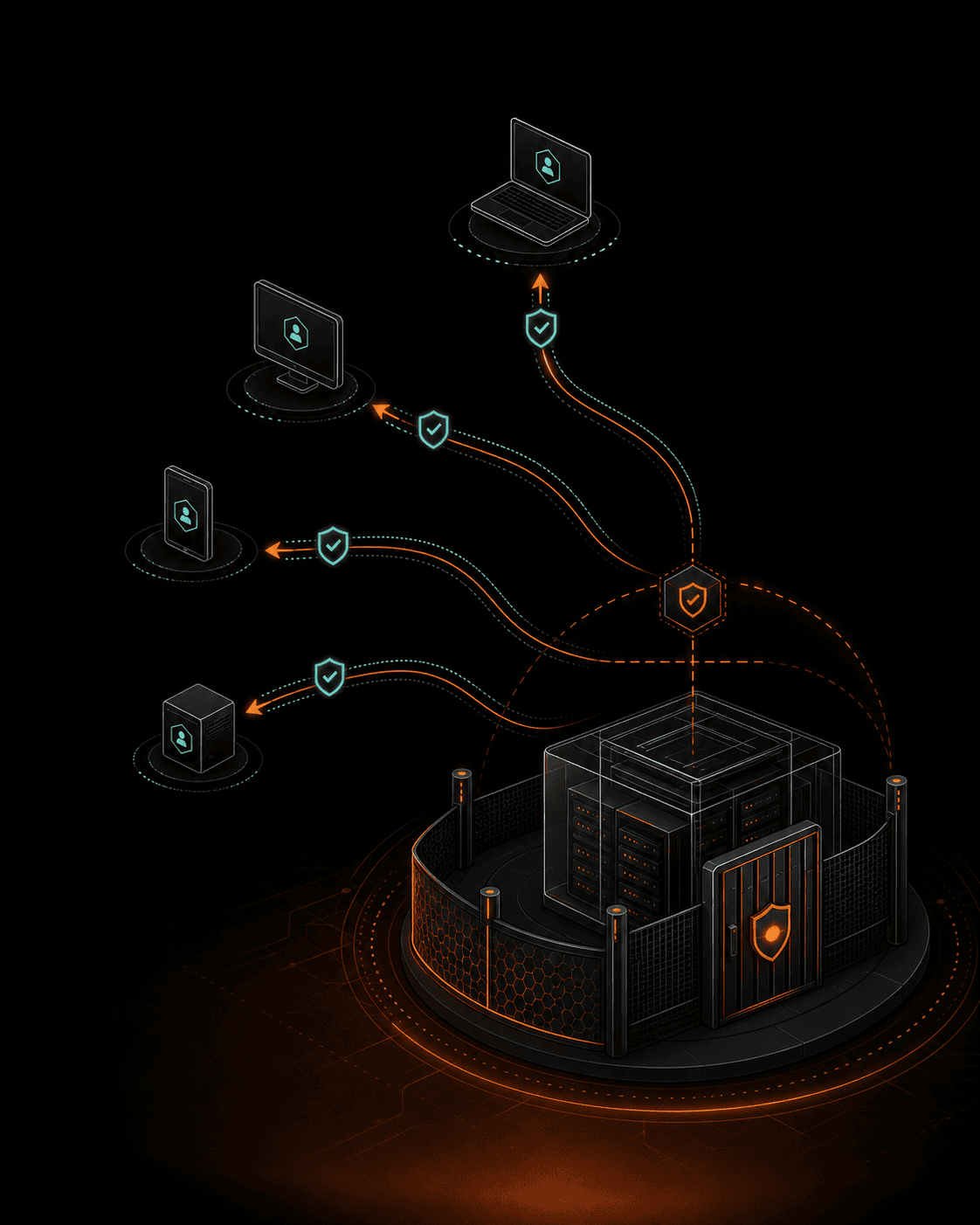
Remote access is often secured by adding more network infrastructure: VPNs, bastion hosts, reverse proxies, firewall exceptions, static IPs, and exposed gateways. Each layer adds operational overhead and can create another target for attackers.
NoPorts takes a different approach. It uses cryptographic identity, outbound-initiated connectivity, and end-to-end encrypted sessions so authorized users, applications, and systems can reach protected assets without exposing inbound listening ports.
// What you'll learn
- How NoPorts replaces network-location-based access with identity-first connectivity
- How outbound-initiated connections reduce firewall changes and local network dependencies
- How scoped, encrypted sessions limit access to the specific service or system authorized
- Where NoPorts fits alongside broader application security, endpoint hardening, and credential hygiene
// Who should read this
- Remote servers and databases
- Edge and field systems
- Customer or partner environments
- Operational technology and critical infrastructure
- Distributed applications and services
- Systems that cannot be easily re-architected
This brief is designed for security, infrastructure, operations, and engineering teams evaluating secure access for:
Get the architecture brief
* Required fields
© 2026 Atsign